
Apostle Paul Tour in Turkey & Greece – Following His Footsteps

Updated: Sep 13
An Apostle Paul tour through Turkey and Greece connects some of the most important locations in the history of early Christianity. From Ephesus and Pisidian Antioch in ancient Asia Minor to Philippi, Thessaloniki, Athens and Corinth in Greece, these destinations bring the Acts of the Apostles and Paul’s letters into their geographical and historical setting.
Following Paul’s complete route is not a simple seven-day journey. His missionary travels covered a vast area, and many biblical sites are separated by considerable distances. A well-designed itinerary therefore focuses on the places most meaningful to the traveller while allowing enough time to understand each destination.
This guide explains the principal locations, their biblical significance and how a practical Apostle Paul journey through Turkey and Greece can be organized.
Apostle Paul Route at a Glance
A practical first journey can include:
Istanbul as the international gateway
Ephesus and the surrounding Selçuk area
Pisidian Antioch near modern Yalvaç, if time permits
Thessaloniki
Philippi and Kavala
Berea, modern Veria
Athens
Ancient Corinth
Travellers wanting a more extensive Turkey itinerary may also consider:
Tarsus
Antioch on the Orontes, modern Antakya
Perge
Iconium, modern Konya
Lystra and Derbe
Assos
Alexandria Troas
There is no single itinerary that suits every church group, family or private pilgrimage. The best route depends on available time, mobility, biblical interests and the balance desired between Turkey and Greece.
Why Follow the Footsteps of Apostle Paul?
Paul’s journeys helped connect communities across the eastern Mediterranean. The places associated with his ministry include Roman cities, ports, trade routes, synagogues, public gathering places and early Christian communities.
Visiting these locations can provide:
Historical context for the Acts of the Apostles
A clearer understanding of Paul’s missionary journeys
Connections to letters including Ephesians, Philippians, Thessalonians and Corinthians
Time for worship, reflection and group discussion
Access to important archaeological sites
A deeper appreciation of the distances Paul and his companions travelled
An Apostle Paul tour is not limited to church groups. It can also appeal to biblical scholars, history enthusiasts, families and travellers interested in the meeting of Greek, Roman, Jewish and early Christian cultures.

Apostle Paul Sites in Turkey
Modern Turkey contains many cities associated with Paul’s life and missionary activity. In the New Testament, much of this region was known as Asia Minor.
Tarsus: Paul’s Birthplace
Paul identified himself as a native of Tarsus in Cilicia. The modern city is located in southern Turkey, near Adana.
Traditional sites associated with Paul include St. Paul’s Well and the historic district surrounding it. Tarsus is geographically distant from Ephesus and Istanbul, so it is normally included only in a longer, more extensive biblical itinerary.
Biblical connection: Acts 9:11, Acts 21:39 and Acts 22:3.
Antioch on the Orontes: Paul’s Missionary Base
Ancient Antioch on the Orontes is modern Antakya in southern Turkey. It should not be confused with Pisidian Antioch near Yalvaç.
The church at Antioch played an important role in Paul’s ministry. Acts describes Paul and Barnabas being sent from this community on their missionary work.
Because Antakya is far from western Turkey’s better-known biblical sites, including it requires additional travel time and careful logistical planning.
Biblical connection: Acts 11:25–26 and Acts 13:1–3.
Perge: Gateway to Asia Minor
The remains of ancient Perge stand near Antalya on Turkey’s Mediterranean coast. Paul and Barnabas travelled through Perge during the first missionary journey.
Visitors can see the remains of a major Roman city, including its theatre, stadium, baths, streets and monumental gates.
Perge can be combined with Antalya and other locations connected to Paul’s journey through southern Asia Minor.
Biblical connection: Acts 13:13–14 and Acts 14:25.
Pisidian Antioch: Paul’s Sermon in the Synagogue
Pisidian Antioch was located near present-day Yalvaç in Isparta Province. This is a different ancient Antioch from Antakya.
According to Acts, Paul delivered an important synagogue address here during his first missionary journey. The archaeological site includes remains from the Roman and early Christian periods.
Pisidian Antioch can be incorporated into an inland Turkey route, although doing so adds driving time and should be planned carefully.
Biblical connection: Acts 13:14–52.
Iconium, Lystra and Derbe
Paul and Barnabas continued from Pisidian Antioch to Iconium, associated with modern Konya, and then to Lystra and Derbe.
These places are central to the account of Paul’s ministry in the region of Galatia. The exact archaeological experience varies by location, and some sites are less developed for visitors than Ephesus or Perge.
They are best included on a specialized itinerary for travellers who want to study Paul’s first missionary journey in greater depth.
Biblical connection: Acts 13:51–14:23 and Acts 16:1–5.
Ephesus: One of Paul’s Most Important Ministry Centres
Ephesus is one of the most significant and rewarding destinations on an Apostle Paul tour.
Paul spent an extended period in Ephesus, teaching and building relationships in one of the Roman world’s most influential cities. Acts also describes the public disturbance connected with craftsmen who produced shrines of Artemis.
The Great Theatre is associated with the gathering during that disturbance. The biblical account does not say that Paul preached to the crowd inside the theatre; his companions and disciples prevented him from entering.
Today, visitors can explore:
The Great Theatre
The Library of Celsus
Curetes Street
The Terrace Houses
The Commercial Agora
The remains of the Temple of Artemis
The Church of Mary
The nearby Basilica of St. John
Ephesus offers an exceptional combination of archaeology, Roman history and early Christian significance.
Biblical connection: Acts 18:19–21, Acts 19 and Acts 20:17–38.

Assos and Alexandria Troas
Paul travelled through the northwestern Aegean region of Asia Minor, including Assos and Troas.
At Troas, Acts describes Paul’s vision calling him to Macedonia. On a later visit, the account includes the story of Eutychus. From Assos, Paul continued his journey by sea.
These locations can be included in a route connecting western Turkey with the Dardanelles, but they require additional travel time beyond a standard Ephesus itinerary.
Biblical connection: Acts 16:8–11 and Acts 20:5–14.
Apostle Paul Sites in Greece
Paul’s arrival in Macedonia marked an important stage in the spread of Christianity into Europe. Several of the Greek cities he visited remain central destinations for faith-based travel.
Kavala: Ancient Neapolis
Paul entered Macedonia through Neapolis, the port associated with modern Kavala.
Kavala can serve as the starting point for the Greek portion of the journey before continuing inland to Philippi. Its waterfront and historic setting help travellers understand how Paul entered the region from across the Aegean.
Biblical connection: Acts 16:11.
Philippi: Paul and Lydia
Philippi is one of the most important Christian archaeological destinations in Greece.
Acts describes Paul meeting Lydia near a place of prayer by the river. Following her baptism, a Christian community developed in Philippi. Paul and Silas were later imprisoned after being brought before the city’s authorities.
Visitors can explore the Roman forum, theatre, early Christian basilicas and the traditional site associated with Paul’s imprisonment. A nearby baptistery commemorates Lydia and the biblical account of her baptism.
The traditional identifications should be understood as places of commemoration rather than definitive archaeological proof of every event.
Biblical connection: Acts 16:12–40 and the Letter to the Philippians.
Thessaloniki: Paul’s Ministry in Macedonia
Paul travelled to Thessaloniki after leaving Philippi. Acts records that he reasoned in the synagogue, and a Christian community formed in the city.
Modern Thessaloniki contains Roman and Byzantine monuments that help illustrate its long history. Important places include the Roman Agora, the Rotunda and several early Christian churches, although not every surviving monument dates directly to Paul’s lifetime.
Paul’s relationship with the Christian community is reflected in the First and Second Letters to the Thessalonians.
Biblical connection: Acts 17:1–9 and 1–2 Thessalonians.
Berea: A Community Known for Careful Study
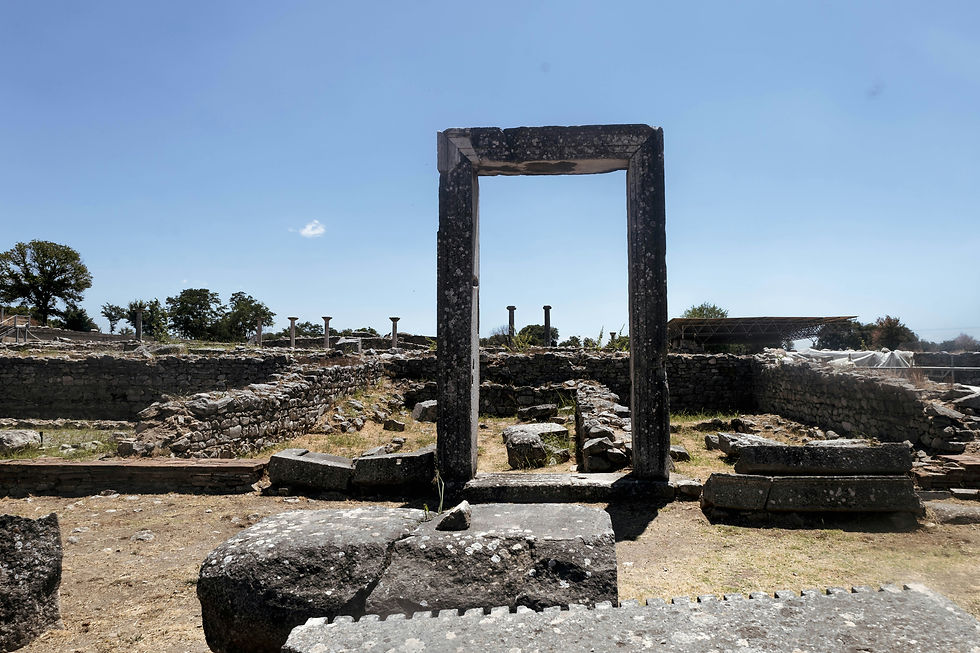
After leaving Thessaloniki, Paul and Silas travelled to Berea, identified with modern Veria.
Acts describes the people of Berea as receiving Paul’s message eagerly and examining the Scriptures carefully. The modern city commemorates this connection at the traditional Bema of Apostle Paul.
Veria fits naturally into a northern Greece route connecting Thessaloniki with other Macedonian destinations.
Biblical connection: Acts 17:10–15.
Athens: Paul at the Areopagus
In Athens, Paul encountered a city filled with temples, monuments and philosophical traditions.
Acts describes his discussion with Epicurean and Stoic philosophers and his address at the Areopagus. The account includes his reference to an altar dedicated to an unknown god.
Travellers can visit the Acropolis area, the Ancient Agora and Areopagus Hill while considering the cultural environment in which Paul delivered his message.
Biblical connection: Acts 17:16–34.
Corinth: Paul and the Early Corinthian Church
Ancient Corinth was an important Roman commercial centre located between mainland Greece and the Peloponnese.
Paul lived and worked in Corinth for approximately eighteen months. Acts connects him with Aquila and Priscilla and describes his appearance before Gallio.
Visitors can walk through the ancient agora, see the Temple of Apollo and view the Bema traditionally associated with Paul’s appearance before the Roman governor.
The First and Second Letters to the Corinthians provide further insight into Paul’s relationship with the Christian community he helped establish.
Biblical connection: Acts 18:1–18 and 1–2 Corinthians.

Turkey and Greece Apostle Paul Itinerary
A practical combined itinerary of approximately 12–15 days could follow this structure:
Days 1–2: Istanbul
Arrive in Istanbul and explore selected Byzantine and early Christian heritage. Istanbul is not identified as one of Paul’s ministry stops in Acts, but it is a convenient international gateway and provides valuable historical context.
Days 3–5: Ephesus and Western Turkey
Fly or travel to the Izmir region and explore Ephesus, Selçuk and nearby Christian sites.
Travellers with additional time may incorporate Assos and Troas or extend inland toward Pisidian Antioch and Konya.
Days 6–7: Thessaloniki
Continue to Greece and use Thessaloniki as the base for exploring the city’s Roman and early Christian heritage.
Transportation between Turkey and Greece should be planned around current flight or ferry schedules rather than assumed in advance.
Day 8: Philippi and Kavala
Take a full-day journey from Thessaloniki to Philippi and Kavala. Visit the archaeological site, locations traditionally connected with Lydia and Paul, and the port through which Paul entered Macedonia.
Day 9: Berea
Visit modern Veria and the traditional Bema of Apostle Paul before continuing south.
Days 10–11: Athens
Explore Athens, including the Acropolis area, Ancient Agora and Areopagus Hill.
Day 12: Ancient Corinth
Travel from Athens to Ancient Corinth. Visit the archaeological site and examine Paul’s ministry in the context of this important Roman city.
Days 13–15: Additional Touring or Departure
Add time in Athens, include another historically significant destination or conclude the journey.
This is only a starting framework. Church groups and travellers with particular scholarly or devotional interests may prefer a longer route.
How Many Days Are Needed?
A focused Turkey and Greece Apostle Paul tour requires approximately 12–15 days.
A shorter journey can concentrate on Ephesus, Philippi, Thessaloniki, Athens and Corinth. Attempting to add Tarsus, Antakya, Perge, Pisidian Antioch, Konya, Troas and every major Greek location to a short itinerary would create excessive travel time.
A more comprehensive route may require two to three weeks.
Best Time for an Apostle Paul Tour
Spring and autumn are generally the most comfortable seasons for visiting archaeological sites in Turkey and Greece.
April, May, September and October usually allow a better sightseeing pace than the hottest summer period. June can also work well, particularly when the journey includes coastal destinations.
July and August remain possible, but early starts, shade, water and a slower midday schedule become important. Winter trips can focus on cities and major archaeological sites, although weather and shorter daylight hours require greater flexibility.
For a complete seasonal comparison, read our month-by-month guide to the best time to visit Turkey and Greece.
Planning for Churches and Faith Groups
Faith-based travel requires more than connecting hotels and transportation.
A thoughtfully planned group journey may include:
Licensed local guides
Biblical and historical interpretation
Time for prayer, worship or Scripture readings
Appropriate pacing for different mobility levels
Comfortable transportation
Group dining arrangements
Carefully located accommodation
Free time for personal reflection
Coordination between Turkey and Greece
A group leader or pastor’s preferred teaching programme
Not every group wants the same balance. Some prefer a detailed archaeological and historical approach, while others place greater emphasis on worship, fellowship and spiritual reflection.
Apostle Paul Tours and the Seven Churches
The Apostle Paul route and the Seven Churches of Revelation route overlap geographically, but they are not identical.
Ephesus is important to both journeys. The Seven Churches route, however, concentrates on the seven communities addressed in Revelation: Ephesus, Smyrna, Pergamum, Thyatira, Sardis, Philadelphia and Laodicea.
An Apostle Paul itinerary follows locations connected with Paul’s life and ministry across Turkey and Greece.
Travellers with sufficient time can combine elements of both routes, but each theme should remain clear. Read our Seven Churches of Revelation Turkey guide for a detailed explanation of that journey.
Frequently Asked Questions
Can you visit Apostle Paul sites in both Turkey and Greece on one trip?
Yes. Turkey and Greece can be combined in one coordinated itinerary. The most practical route depends on the sites selected and available transportation between the two countries.
What are the most important Apostle Paul sites?
For a first combined journey, the principal sites are Ephesus, Philippi, Thessaloniki, Athens and Corinth. Berea and Kavala fit naturally into the Greek route, while additional Turkey sites can be added for a more extensive itinerary.
Is Ephesus connected with Apostle Paul?
Yes. Paul spent an extended period in Ephesus, and several events described in Acts are associated with his ministry there. The city is one of the most important destinations on a biblical Turkey itinerary.
Is Istanbul part of Apostle Paul’s biblical route?
The New Testament does not identify Istanbul, ancient Byzantium, as one of Paul’s ministry stops. It is commonly included as an international gateway and for its broader Byzantine and Christian history.
What is the difference between Antioch and Pisidian Antioch?
Antioch on the Orontes is modern Antakya in southern Turkey and served as an important base for Paul’s missionary activity. Pisidian Antioch was an inland city near modern Yalvaç where Acts records Paul preaching in the synagogue.
Can an Apostle Paul tour be customized for a church group?
Yes. The route, trip length, hotels, transportation, guiding and time for worship or teaching can be adjusted around the group’s needs.
Is the Apostle Paul route suitable for travellers with limited mobility?
Many archaeological sites contain uneven stone surfaces, steps and limited shade. The itinerary should be designed around each traveller’s mobility, with realistic walking expectations and suitable transportation wherever possible.
Plan Your Apostle Paul Journey
Following Apostle Paul’s footsteps through Turkey and Greece is both a historical journey and a deeply personal experience.
Rather than rushing between every location connected with Paul, choose a route that gives your group enough time to understand the biblical setting, explore the archaeological remains and reflect on the significance of each place.
Go Epic Tours can design a customized Apostle Paul journey around your dates, group size, preferred pace and biblical interests. We can coordinate accommodations, transportation, licensed guides and experiences across Turkey and Greece as one connected itinerary.
Contact Go Epic Tours to begin planning your private or church-group Apostle Paul journey.


Comments